Private Microsuction Ear Wax Removal in Hythe CT21 - Discover Expert Services and Benefits
Article Revised | 31 July 2026 at 18:12
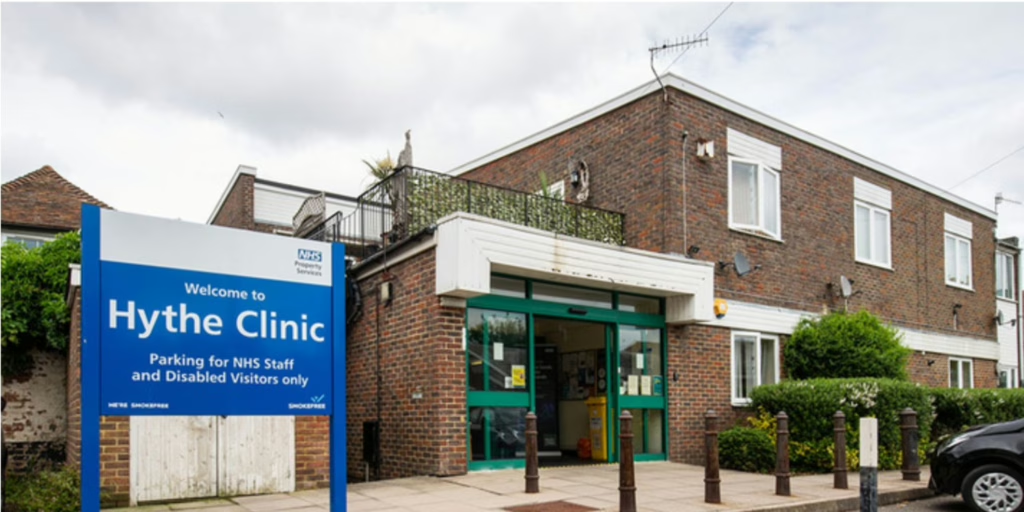
The Hythe ear-wax clinic operates from Hythe Clinic on Sun Lane, with level access into the building and accessible parking immediately outside. The premises have been arranged to simplify arrival for people using mobility aids or carrying hearing equipment, and clear external signs guide visitors from the road to the clinic entrance.
Clinician‑Led Private Microsuction in Hythe Ct21, Benefits and Care
Research Catalogue Results for Ear Wax Removal
- The auricular cough reflex: lateralization, prevalence, procedural determinants, and the role of examiner handedness. - van de Loo J, Mayer M, Sharaf K, Eckel H, Jansen L, Klussmann JP, Luers JC., 2026.
- High-definition otoscopic device for humanitarian mission: how i do it. - Lechien JR, Maniaci A, Kipsang MJ, Kibor M, Vaira LA., 2025.
- Use of Castor Oil in Dermatology: A Narrative Review. - Girdler K, Cabatu A, Olds H, Potts GA., 2026.
Source: Europe PMC. These are bibliographic matches, not personalised medical advice or an endorsement of a treatment.

Private microsuction is a clinician-led method of ear-wax removal carried out in a controlled clinical environment, using magnification and a slender suction probe to extract impacted cerumen while protecting the ear canal skin and eardrum. Many patients experience restored hearing clarity within minutes, and the technique often reduces the chance of canal abrasion or infection when compared with blunt irrigation. Practitioners complete a targeted otoscopic assessment before any treatment to confirm suitability, discuss previous ear surgery or membrane problems, and consider whether audiology follow-up would be useful. We aim to provide timely appointments, explain how to prepare—such as avoiding cotton buds—and offer a personalised cerumen management plan that reflects hearing-aid use, recurrent blockage and when softening drops may be helpful.
Clinical Advantages Summarised
Selecting private microsuction in Hythe commonly provides shorter waits, continuity with the same clinician and direct visual control that limits procedural risk. People who use hearing aids or who have experienced recurrent blockages often find that scheduled maintenance protects device function and cuts down on emergency visits. The typical pathway comprises assessment, treatment and clear aftercare instructions to support ongoing ear health and prompt ENT referral if required.
Accessible On-Site Parking
Hythe Clinic offers a level, well-arranged car park with designated visitor bays located close to the entrance, making access straightforward for patients who use mobility aids. The car park’s proximity to the clinic simplifies entry and exit for drivers and passengers alike.
Facilities for Drivers with Limited Mobility
There are designated disabled parking bays that provide level access to the clinic’s main entrance and are wider than standard to facilitate side transfers. Tactile paving and clear signage assist orientation for people with visual impairment.
Step‑By‑Step Procedure Overview
- Positioning and visualisation: You will recline slightly so the clinician can use a binocular otoscope and maintain precise control during the procedure.
- Aftercare advice: Before you leave you will be given verbal and written guidance on caring for the ear, signs of infection to watch for and when to seek further review.
- Microsuction: Under binocular visual control a fine suction probe is used to remove wax gently, with pauses to reassess comfort and progress.
- Wax softening if needed: If cerumen is very hard the clinician may recommend a short course of softening drops before an appointment to make extraction safer.
- Immediate testing: Once the canal is clear the practitioner may re-examine the eardrum and carry out a quick hearing check to confirm that hearing aid fit or thresholds are no longer affected.
Appointment Duration and Typical Sensations
Most appointments last around fifteen to thirty minutes, depending on how much wax is present and whether both ears need attention. Common sensations during suction include brief tickling or mild pressure rather than pain, and many people notice a rapid improvement in hearing.
Important Safety Advice
If you develop sudden pain, bleeding or vertigo during or after treatment, contact the clinic promptly for guidance and assessment; such problems are uncommon but merit immediate attention.
Indications, Contraindications and Safety Considerations
Who Is Suitable and When Microsuction Is Unsuitable
Microsuction suits most adults and cooperative children following clinical assessment, particularly where impacted, dry or flaky wax causes hearing difficulty, aural fullness or impairs hearing-aid performance. It is often chosen when irrigation would be less appropriate, for example after tympanic membrane repair, with recurrent otitis externa or in patients prone to swimmer’s ear. Contraindications include active bleeding in the canal, acute severe infection with purulent discharge, or structural abnormalities that make instrumentation unsafe. In these situations the clinician will propose alternative medical treatment or refer to ENT for further investigation or surgical opinion.
Risk Reduction and Clinical Governance
Mitigating risk depends on taking a full history, performing an otoscopic inspection and using binocular magnification so the clinician can see the canal and eardrum throughout. Findings are documented, informed consent is recorded and infection-control protocols are followed for equipment cleaning and suction unit maintenance. If a perforation is identified the practitioner will assess whether microsuction is still appropriate, and if not will arrange suitable medical or ENT pathways.
Escalation and Referral Approach
If there are signs of significant middle-ear disease, an ongoing perforation or unexplained hearing loss, staff will recommend urgent GP or ENT referral and, where relevant, expedite audiology testing to guide further management.
Clinical Comment
Clinicians apply professional judgement to balance potential benefits against risks, and they will explain alternatives such as cerumenolytics or medical management when microsuction is not the safest option.
How to Book an Appointment
Appointments are offered by appointment only so that clinicians can allocate focused clinical time and maintain infection-control standards. Because demand can be high we advise booking in advance to secure a suitable slot and ensure you receive individual care.
You can book online through the secure booking page, by telephone or by email; the online diary shows available times and lets you choose morning or afternoon appointments to fit your schedule.
Choosing private microsuction may avoid long waiting lists associated with some NHS services, allowing quicker access to professional treatment for ear-wax problems.
Private Pricing and Costs
Published Payment Methods
- Credit cards
- Debit cards
- Contactless or NFC payments
Payment information may change. Confirm prices, insurance eligibility and accepted methods directly with the provider. Place attributes are provided by Google Maps.

We publish clear private fees for microsuction and any associated consultations, outlining charges for single-ear procedures, bilateral sessions and optional extras such as a hearing screen or earmould impressions. Private appointments can provide faster access and continuity with the same clinician, which some patients prefer to NHS waiting times. Fees typically include the pre-procedure assessment, the microsuction itself and brief post-procedure advice; any further investigations or ENT referrals are discussed and costed separately. Card payments are accepted and we can supply invoices suitable for health cash plans or insurers where policies allow.
- Complex cases: Impacted or very hard cerumen that needs repeat sessions or extended clinical time may attract an additional fee, which will be explained before treatment so consent remains informed.
- Hearing check add-on: A short audiological screen can be performed after wax removal to document thresholds and advise whether full audiometry is indicated.
- Bilateral treatment: When both ears require attention the combined appointment covers assessment and removal of wax from both sides, with the session extended to ensure thorough clearance and comfort.
- Cancellation policy: Terms for cancelling or rescheduling are provided at booking to support efficient clinic operation, and any late cancellation charges are explained in advance.
- Single ear microsuction: The fee includes a full pre-treatment assessment, recording of medical history, the microsuction procedure by a trained practitioner and post-procedure guidance with a follow-up call if necessary.
Arranging a Microsuction Session
Appointments at the Hythe clinic are by booking only so each patient receives dedicated clinical time and the team can carry out infection-control cleaning between visits. Book online via our secure booking page, by telephone or by email; the online diary shows available slots and permits selection of morning or afternoon times. Occasionally short-notice appointments are held for urgent problems where a blockage affects hearing or balance, and we keep a cancellations list to offer earlier appointments when possible.
Private Microsuction in Hythe Ct21 — Key Benefits and Quality Care

Our Hythe CT21 site delivers private microsuction ear-wax removal by experienced clinicians and accredited ear-care practitioners using binocular microscopy and precision suction. This approach is often preferred to irrigation because it keeps the canal under direct visual control, lowering the risk of perforation and reducing post-procedure infection rates, while restoring hearing clarity promptly. Patients can sometimes access same-day or short-notice appointments, and treatments occur in a hygienic room equipped with medical-grade suction units. Before you attend we outline preparation advice, including not using cotton buds, and we provide tailored cerumen management guidance, safe ear-hygiene recommendations and clear thresholds for further assessment for hearing loss or tinnitus. We can accept urgent walk-ins by arrangement for blocked ears, offer private billing for those who wish to avoid NHS delays, and advise on earmould fittings and routine hearing checks as part of long-term ear care. When there is a history of ear surgery, a persistent perforation or active discharge an initial review determines whether microsuction is appropriate, and we will liaise with your GP or ENT specialist if required.
How the Microsuction Procedure Works
Preparation and Initial Assessment
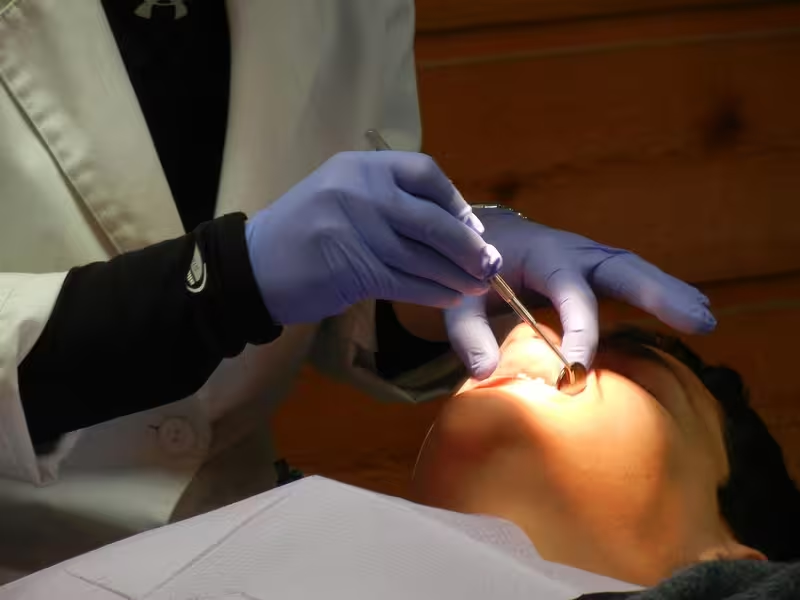
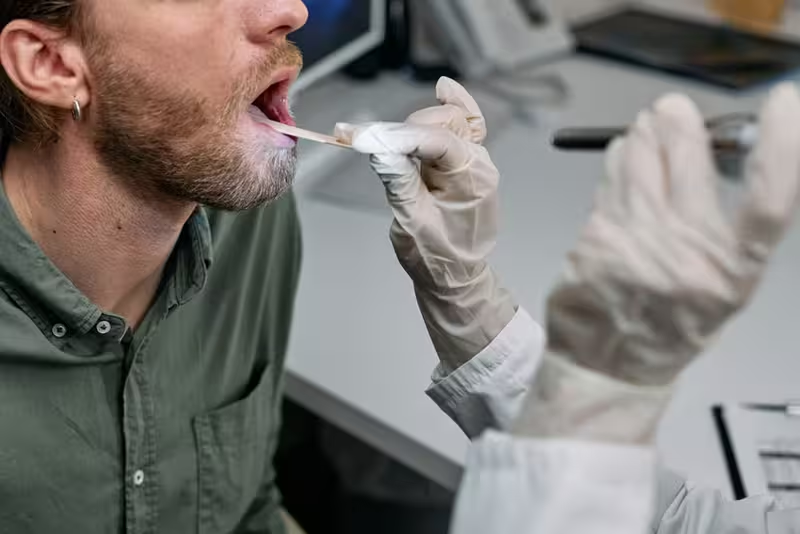
On arrival the clinician will take a concise medical history, ask about symptoms such as tinnitus or vertigo and inspect the ear with an otoscope. If wax is particularly hard a short course of cerumenolytic drops may be suggested to soften debris before treatment. The practitioner describes the procedure, typical duration and expected sensations, and obtains consent to proceed. The treatment is carried out under binocular microscopy so the clinician has improved depth perception while using a fine suction probe to remove wax under direct vision.
Procedure Steps
- Microscopic examination: Using a binocular otoscope the clinician inspects canal anatomy, notes any skin changes and confirms the proximity of the tympanic membrane before instrumentation.
- Suction clearance: A fine, sterile suction tip removes softened or friable wax gently with frequent checks to ensure the canal remains comfortable and intact throughout.
- Patient positioning and comfort: You recline in a treatment chair to provide stable access and reduce movement; the clinician will explain each stage aloud so you know what to expect.
- Documentation and aftercare: The practitioner records findings, provides written aftercare instructions and discusses any need for follow-up or ENT referral openly with you.
- Reassessment and hearing check: After clearance the clinician inspects the eardrum and may perform a simple hearing comparison or advise formal audiometry if thresholds remain reduced.
Duration and Sensations During Treatment
Most single-ear clearances take under twenty minutes, with bilateral work taking longer. Patients usually report mild tickling, slight pressure or intermittent sensations rather than pain, and many notice an immediate improvement in hearing.
Consent and Initial Clinical Review
When you arrive you will be welcomed and taken to a private treatment room where the clinician reviews your medical history, asks about current ear symptoms and carries out an otoscopic inspection. Any previous ear surgery, discharge, tinnitus or vertigo is recorded to tailor the safest plan. The practitioner explains the procedure, likely duration and possible minor effects such as transient itching or a sense of fullness, and gains verbal consent before starting. If active infection or a perforation is discovered, appropriate medical management will be recommended rather than microsuction.
Reasons to Choose Private Microsuction
Private microsuction offers quicker access to treatment in a calm clinical environment and enables continuity with the same practitioner. The method is generally comfortable and, because it is performed under direct vision, clinicians can see the canal throughout which reduces the risk of pushing wax deeper. For hearing-aid users and those with recurrent impaction, regular microsuction appointments can be an effective preventive strategy to protect residual hearing and optimise device performance.
- Follow-up care: Clear aftercare instructions and options for repeat appointments help maintain a healthy ear canal and lower the chance of recurrent blockages.
- Record keeping: Detailed notes about canal anatomy and the nature of cerumen support continuity of care and any necessary referrals to ENT or audiology.
- Comfort: By avoiding large volumes of water the technique benefits people prone to swimmer’s ear or those with tympanic membrane repairs where water exposure may be unsuitable.
- Speed of treatment: Many patients notice immediate improvement in hearing and balance within minutes, enabling a prompt return to daily life.
- Suitability: Microsuction can be used for most adults and cooperative children after assessment, and it is often appropriate post-infection when clinically indicated.
- Clinic expertise: Practitioners are trained in otoscopy and microsuction, using specialist suction probes that remove impacted wax safely while avoiding contact with the tympanic membrane.
Blue Badge and Special Parking Details
- Drop-off area: A short-term drop-off zone beside the main doors enables companions to help you into the clinic before relocating the vehicle to a longer-stay bay.
- Overnight and long-stay options: Public long-stay car parks are a short walk away and are signposted from the main road for those combining clinic visits with other errands.
- Security: The parking area is well lit after dark and within sight of the clinic entrance, providing reassurance when returning to your vehicle following evening appointments.
- Pedestrian routes: Safe, step-free walkways connect the car park to the clinic, helping people who use walking aids to transfer with ease.
- Blue badge parking: Clearly signed blue badge bays are positioned closest to the entrance and provide space for vehicle-side wheelchair transfers to assist patients with limited mobility.
- Parking during events: Demand increases on event days, so please check local council listings and allow extra travel time if visiting then.
Booking Notes and Cancellation Guidance
- Travel time: Allow additional time for unfamiliar journeys to Hythe, including parking and public transport connections, especially during busy tourist periods.
- Payment options: Card payments are accepted on the day and we provide receipts suitable for health cash plans or insurers where your policy allows reimbursement.
- Choose the correct appointment type: Make sure you select microsuction rather than a general consultation, as the procedure needs specialist equipment and longer appointment slots to allow a safe and thorough removal.
- Preparation notes: Avoid inserting cotton buds or using ear candles before your visit, and bring hearing aids so the clinician can assess fit and function after wax clearance.
- Cancel early if needed: Please notify us as soon as possible if you need to cancel so we can reallocate your slot to another patient and offer alternatives.
Priority Access for Urgent Cases
Individuals with sudden hearing loss, intense ear pain or vertigo may be prioritised for urgent assessment; tell reception about severe symptoms when booking so staff can triage appropriately. Where medical review is required we will work with local GPs to support continuity of care.
Booking Suggestion
If you prefer a particular practitioner, choose their name when booking if available or request continuity and we will confirm whether the same clinician can provide ongoing care.
Map and Directions — Ear Wax Removal Hythe (East Sussex)
You can view directions to Hearing First Microsuction Hythe on Google Maps by entering your start location to receive turn-by-turn instructions to the clinic.
%%JSLNAPSECTION_2_3B5570F5008543FD%%
We are among the most trusted private ear wax removal clinics in Hythe, offering prompt, professional care.
— read our many five-star reviews below to see independent feedback from satisfied patients.
Who Gains Most from Private Microsuction in Hythe
Typical Patient Groups and Presentations
Private microsuction helps a wide range of people: hearing-aid users noticing reduced amplification, adults with long-standing blockage affecting concentration or balance, and younger patients with recurrent impaction who tolerate clinical inspection. Those with sensitive ear canal skin, prior tympanic membrane repair, or occupational needs for rapid hearing restoration (for example in customer-facing roles) particularly appreciate the speedy access and close visual control this approach offers. People whose tinnitus is aggravated by obstructive wax may get relief after clearance, although persistent tinnitus should receive separate diagnostic assessment.
- Sensory sensitivity: Patients preferring a quiet, clinical setting with a familiar clinician often tolerate microsuction more easily than noisy irrigation methods.
- Recurrent impaction: Individuals with repeated occlusion benefit from scheduled maintenance and personalised cerumen plans that reduce emergency visits.
- Pre-operative clearance: Those needing ear clearance before audiology or ENT assessment can be prepared promptly to avoid diagnostic delays.
- Hearing aid users: Regular microsuction appointments help maintain fitting, prevent feedback issues and support optimal device performance between audiology reviews.
- Occupational needs: People whose work depends on reliable hearing frequently prioritise rapid private access to limit downtime and maintain safety at work.
Parking at the Clinic
Car Parks Near Hearing First Hythe
- The Paddocks Car Park, approximately 0.1 miles from Hearing First Hythe. View on Google Maps.
- Military Road Car Park, approximately 0.3 miles from Hearing First Hythe. View on Google Maps.
- Twiss Fort, approximately 0.4 miles from Hearing First Hythe. View on Google Maps.
Parking information and place links are provided by Google Maps. Check restrictions and charges locally.
Hythe Clinic provides a spacious, level car park with multiple bays clearly marked for clinic visitors. The surface is flat and close to the entrance, assisting patients who carry hearing aids or use mobility equipment. During busy town events we recommend arriving a little earlier to secure a space and complete any registration. There is no parking charge for clinic visitors, which simplifies arrival for those travelling from nearby towns, and the layout allows straightforward manoeuvring even for larger vehicles.
Private Microsuction in Hythe Ct21 — Expert Care and Main Benefits
Our Hythe CT21 service offers private microsuction performed by skilled clinicians and accredited ear-care practitioners. The method uses binocular microscopy and precision suction as a safer alternative to irrigation by maintaining direct visual control, lowering the risk of perforation and reducing post-procedure infection, while restoring hearing clarity quickly.
Patients can often access same-day or short-notice slots in a hygienic environment equipped with medical-grade suction units. We provide clear preparation advice, bespoke cerumen management and thresholds for further assessment. Urgent walk-ins for blocked ears may be accepted, and we coordinate with GPs or ENT colleagues when necessary.
- Expert practitioners trained in otoscopy and microsuction.
- Comfortable procedure with lower risk of pushing wax deeper.
- Immediate improvement in hearing and balance for many patients.
- Follow-up care and comprehensive record keeping to ensure continuity.
What to Expect During Your Microsuction Visit
Book Your Hythe Microsuction Appointment, And Relieve the Discomfort Caused by Ear Wax.
Our Hythe microsuction service welcomes patients from St Mary’s Bay, Romney Marsh, Newchurch, Folkestone, Saltwood, Seabrook, Palmarsh, Botolph’s Bridge, Sandgate, Pedlinge, Lympne, West Hythe, Dymchurch, Westenhanger, Beachborough, Stanford, Etchinghill, Postling, Sellindge, Burmarsh, Aldington, Bonnington, Bilsington, Stone Cross, Ruckinge, Mersham, The Forstal, Smeeth, Lilyvale, Brabourne Lees, Monks Horton, Broad Street, Newbarn, Stowting, Sixmile, Lymbridge Green, Bodsham, Newington, Arpinge, Frogholt, Peene and many other Kent towns and villages; we welcome both local residents and visitors seeking prompt private care.
Comparing Microsuction and Irrigation: Safety and Outcomes
Key Clinical Differences
Microsuction relies on direct binocular visualisation with magnification and a fine suction tip, whereas irrigation uses a stream of water to flush the canal. The visual control afforded by microsuction reduces the chance of touching the tympanic membrane or driving wax deeper, risks sometimes linked to irrigation. For patients with previous perforation, tympanoplasty or chronic discharge, microsuction can be preferable since it avoids adding water into a potentially vulnerable middle ear and allows a safer inspection of the canal skin and eardrum.
Professional guidance and clinical experience have prompted many primary care services to limit irrigation on safety grounds, increasing referrals to private microsuction providers. The decision remains individual, taking into account history, canal anatomy and the type of impaction.
| Feature | Microsuction | Irrigation |
|---|---|---|
| Visual control | Direct binocular visualisation, enabling precise removal | Limited visual control once water is introduced, risk of deeper impaction |
| Water exposure | No, so safer with perforations or post-surgery | Yes, which may increase infection risk in vulnerable ears |
| Typical suitability | Wide, including many post-operative and hearing aid users | Reduced, not recommended where membrane integrity is uncertain |
Appointment Booking and How to Reserve

Because demand is high, ear-wax microsuction is offered by appointment only. You can reserve a microsuction appointment online, or use the booking button below to choose a convenient time.
Accessible Parking Options

There are several disabled parking bays opposite the clinic entrance to provide close, convenient access for patients with mobility limitations.
Microsuction Versus Ear Syringing: Comparing Safety and Effectiveness

Aftercare, Warning Signs and Protecting Ear Health
Immediate Post‑Procedure Guidance
Following microsuction the clinician supplies both written and verbal aftercare tailored to your ear condition. Typical advice includes keeping the canal dry for a short period if the skin is sensitive, avoiding insertion of objects such as cotton buds, and using only clinician-recommended drops when necessary to support skin moisture. Patients prone to dryness may be advised specific emollient drops, while those at higher infection risk receive targeted hygiene guidance and a clear list of symptoms that should prompt earlier review. Explicit instructions are provided for when to seek further care, for example worsening pain, fresh bleeding, ongoing discharge or new-onset vertigo.
Red Flags and When to Seek Help
- Ongoing discharge or foul-smelling drainage suggests a possible infection and should lead to medical review rather than further home care.
- Severe or worsening pain that does not ease with over-the-counter analgesia, particularly if fever is present, requires urgent clinical assessment to exclude infection or canal injury.
- Fresh bleeding or the sensation of continuous fluid after treatment should prompt contact with the clinic or your GP to check for abrasion or an unrecognised perforation.
- Persistent dizziness or marked imbalance occurring during or after the procedure warrants urgent evaluation for vestibular disturbance or barotrauma.
- New or worsening tinnitus that disrupts sleep or daily function should be assessed by an audiologist or GP to determine if further investigation is appropriate.
Practical Self‑Care Tips
Avoid inserting objects into the ear canal, follow any prescribed drops exactly, and arrange follow-up care if you have repeated blockages so a maintenance plan can be agreed with your clinician.
Other Nearby Clinics to Consider
Below are other clinics in the surrounding area you may wish to consider:
- Hastings: Private Microsuction Ear Wax Removal, TN34
- Ashford: Private Microsuction Ear Wax Removal, TN24
- Surbiton: Private Microsuction Ear Wax Removal, KT6
Microsuction Vs. Ear Syringing — Patient Experiences and Trends
Many GP surgeries in and around London have reduced or stopped offering ear syringing. This shift reflects both funding decisions and clinical concerns, since irrigation can carry higher safety risks compared with microsuction. Potential complications linked to irrigation include ear infection, increased tinnitus, hearing deterioration, eardrum perforation and deeper wax impaction. As a result, walk-in irrigation services have become less common and patients increasingly look to microsuction as a safer alternative, creating higher demand for private provision and sometimes longer waits for NHS microsuction.
You do not necessarily need to wait months for microsuction. Private treatment can provide faster access and in many cases is more affordable than expected. Visit our booking page to check availability and you could have an appointment this week.
Disabled Parking Facilities
Disabled Access
Clinic Accessibility, Blue Badge Parking and Step‑Free Facilities
Design Features That Support Access
The Hythe clinic is arranged to support patients with mobility needs, offering level, step-free access from pavement to treatment rooms, wide doorways suitable for wheelchairs and mobility scooters, and seating planned to ease transfers beside the waiting area. Staff are trained to provide reasonable adjustments such as arranging a chaperone or extending appointment time to reduce stress for people with sensory sensitivities. We also aim to minimise environmental noise and communicate clearly for people with hearing or visual impairment, providing written summaries when helpful and allowing a companion to remain during registration and procedures when support is needed.
- Assistance on arrival: Reception staff can meet patients at the door, help with unloading mobility aids and support a calm transition into the clinical environment.
- Accessible toilets and support rails: Ground-floor facilities include larger cubicles and grab rails to aid independence and dignity.
- Blue badge parking: Designated bays close to the entrance minimise walking distance and allow vehicle-side transfers and loading of mobility equipment.
- Adjustable seating and lighting: Treatment rooms have adjustable chairs and lighting to assist safe transfers and comfort for people with sensory needs.
- Step-free routes: Smooth, level surfaces with gentle gradients link parking areas to the doors and tactile paving aids orientation for visually impaired visitors.
Further Information and Resources

Read further details about ear-wax removal in Hythe provided by Hearing First for more context on services and the clinic location.
Ear Wax Removal in Hythe Ct21 — Map, Location and Directions
Finding Our Hythe Clinic
Hearing First Hythe operates from Hythe Clinic, Sun Lane, Hythe CT21 5JU, a short stroll from the town centre with good signage from the A259. For turn-by-turn directions, enter the clinic address into Google Maps to plan the best route from your postcode, which will also indicate local restrictions and suitable approaches for larger vehicles. The clinic is situated in a mixed commercial and residential zone, with nearby bus stops linking Hythe and Folkestone. Drivers should check for any temporary roadworks that can affect access, particularly during school term times.
Local Travel Advice
If travelling by public transport, the closest bus stops are typically a five to ten minute walk away and Folkestone West is the nearest mainline station with onward buses to Hythe. Taxis can drop passengers at the clinic entrance where a short-term drop-off point is available for those with limited mobility. Cyclists will find public racks along the high street and there is level access from Sun Lane to the clinic, so the final approach is straightforward. On busy summer weekends allow an extra ten minutes to walk from nearby car parks.
Accessibility, Coordinates and Contact Details
The clinic postcode is CT21 5JU and telephone enquiries are handled on +44 1303 610199; our reception team can advise on the best times to arrive, available parking bays, and any temporary access changes. If you require assistance on arrival, please tell us when you book and we will arrange for a practitioner to greet you and facilitate timely access to the treatment room.
Digital Tip for Visitors
Save the booking page and add the clinic address to your phone’s maps app so you have a stored route for future visits; this can be useful when travelling from villages where mobile signal is intermittent and offline directions may be needed.
%%JSLFACTSECTION_1_D8A6592E9DDFEF74%%Video: What to Expect During Your Hythe Appointment
Appointment Booking and Availability
Ear Wax Removal Hythe, East Sussex — Map and Directions
Finding the ear-wax removal clinic in Hythe is straightforward: enter your start point into Google Maps and follow the suggested route to Sun Lane. The mapping service will offer the quickest approach and highlight any local restrictions to consider.
Our address is Hythe Clinic, Sun Ln, Hythe, CT21 5JU. For queries or directions by phone call +441303610199 and reception can advise on parking and access arrangements.
We are pleased to have positive client feedback which reflects our commitment to courteous and effective ear care; many patients comment on the speed of relief and the professional approach of clinicians.
Booking, Availability and Private Billing Notes
How to Arrange an Appointment and Typical Wait Times
Private microsuction sessions are timetabled so each patient receives the required clinical time and infection-control cleaning between visits. Booking options include online systems that show real-time availability, telephone booking for personal assistance and email enquiries for more complex questions. Short-notice slots may be reserved for urgent presentations such as sudden hearing loss or acute blockage affecting balance; the clinic may also keep a cancellations list to contact patients seeking earlier appointments. Private access can often reduce waiting times compared with some NHS pathways, enabling patients to manage hearing issues without prolonged delay.
Payment, Insurance and Cancellation Information
- Insurance claims: Check your policy terms before booking to confirm whether microsuction or associated consultations are covered and what documentation is required for a claim.
- Cancellation policy: Clear cancellation and rescheduling conditions are provided at booking to protect clinic capacity and allow timely reallocation of appointment times.
- Payment methods: Card payments are accepted on the day and the clinic will provide an itemised invoice suitable for health cash plans or insurers where policies permit reimbursement for private ear care.
- Preferred clinician requests: If you would like continuity with a particular practitioner, request this at booking and the clinic will try to accommodate where schedules allow.
- Urgent prioritisation: When serious symptoms are reported at booking, staff will triage the request to arrange prompt clinical assessment or recommend urgent GP/ENT referral if needed.
How Patient Feedback Shapes Services
Feedback is regularly reviewed to refine appointment flow, update patient information and ensure equipment and staff training remain current; patient comments are essential to sustaining clinical governance and confidence.
Local Patient Feedback
Many local patients give high ratings, praising the thorough, calm clinical manner and rapid symptom relief after microsuction. Typical reports include immediate hearing improvement and less aural fullness, with reassurance derived from clinicians who explain each stage. Independent reviews on Google and other platforms offer additional perspectives for prospective patients, and we encourage people to look for comments on professionalism, clinic cleanliness and the quality of aftercare. With consent, anonymised accounts may be shared to illustrate common outcomes while preserving confidentiality.
Areas Served and Nearby Clinics
The Hythe clinic attracts patients from across south Kent who prefer a local private option for microsuction rather than travelling to larger centres. Regular visitors come from St Mary’s Bay, Romney Marsh, Newchurch, Folkestone, Saltwood and nearby villages, often choosing us for proximity and reduced waiting times. We accept referrals from local GPs and audiologists for patients needing same-day wax clearance before audiology appointments or hearing-aid fittings and provide travel and parking information for those coming from further afield.
- Cross-county visitors: Patients from neighbouring East Sussex towns sometimes combine a clinic appointment with other local healthcare visits to make efficient use of travel time.
- Rural communities: Residents of Romney Marsh, Burmarsh and nearby parishes value weekday and occasional weekend slots that reduce travel needs and enable same-week treatment.
- Coastal villages: Those living in St Mary’s Bay and Seabrook find the clinic convenient for short journeys and appreciate parking for repeat maintenance appointments.
- West Kent travellers: People from Lympne, West Hythe and small hamlets use the clinic when local GP waiting lists are long and they need prompt relief.
- Folkestone area: Patients from Folkestone and Sandgate often select our Hythe site for quicker appointments, particularly prior to audiology assessments or hearing-aid fittings.
Aftercare and Safety Information
Post-procedure care concentrates on keeping the ear canal dry and avoiding insertion of objects that could reintroduce wax. Patients are usually advised to avoid swimming for a short time if the canal is sensitive, and to report any new pain, discharge or persistent dizziness promptly. We provide a written leaflet covering recommended drops for those prone to dryness, simple outer-ear cleaning tips and the warning signs that should prompt GP review. During the procedure clinicians check for any canal abrasion and will discuss findings directly if present.
Our priority is to protect the delicate skin of the ear canal and preserve its natural protective function — a small amount of wax is healthy and serves a useful role.
What to Expect During Your Hythe Microsuction Appointment
Arrival, Consent and the Clinical Environment
Appointments start with a private review of your medical history and current ear symptoms, including any prior ear surgery, recent infections or issues such as tinnitus or dizziness. The clinician outlines the microsuction steps, confirms you understand and obtains consent before any instrumentation. Treatment takes place in a clean, well lit room equipped with a medical suction unit and binocular visualisation so the practitioner can work precisely. You will be asked to recline slightly and to remain as still as possible; staff will keep you informed throughout to ensure comfort and confidence as the procedure progresses.
After clearance the clinician records findings, gives written aftercare advice and discusses whether a hearing check, audiology referral or ENT review is advisable. Many patients report immediate improvement in hearing and a reduction in fullness, though a short recovery period may be needed if minor canal irritation occurs.
Disabled Access Details
The clinic is located on the ground floor and provides step-free entry from the pavement into the building, making access straightforward for wheelchair users and people with reduced mobility.
Facilities for Drivers with Limited Mobility
Designated disabled bays sit opposite the clinic entrance and offer level access to the pavement with a gentle slope to the main door. Bays are wider than standard to permit side transfers and the surface includes tactile paving near the kerb to help orientation. If you have a blue badge, display it visibly and tell reception when booking so we can try to reserve a space. Assistance with unloading is available and companions may remain with you during registration to support the visit.
If you require a chaperone or specific transfer support, please inform the clinic when booking and we will make suitable arrangements.
Level Access and Step‑Free Entry
The ground-floor clinic has full step-free access from the entrance to the treatment room, suitable for wheelchair users and those with limited mobility. Door widths permit mobility scooters and wheelchairs, and the treatment chair can be adjusted to facilitate safe transfers. The waiting area includes space for a wheelchair beside seating and lighting and heating can be adapted to assist patients with sensory sensitivities. Staff receive training to communicate clearly with people who have hearing or visual impairments.
Tell us about any transfer or communication needs when booking so we can prepare the room, equipment and staff to ensure a calm and efficient visit.
Safety and Clinical Effectiveness
Microsuction is widely considered the modern standard for cerumen removal in many private clinics because it enables direct visualisation of the canal and controlled extraction using a fine suction probe. By contrast, ear syringing or irrigation uses a stream of warm water to flush the canal, which can risk pushing wax deeper, provoking infection, causing dizziness or, in vulnerable patients, perforating the eardrum. Consequently, many GP surgeries have reduced or stopped syringing and patients seeking safe, timely clearance increasingly turn to private microsuction to avoid complications and long NHS waits. Each case is assessed on its merits, and microsuction can be suitable for hearing-aid users, people with perforated eardrums or prior middle-ear surgery when clinically appropriate.
If you experience repeated impactions, a registered clinician can suggest maintenance strategies, recommend softening drops before an appointment where needed, and offer practical steps to limit future wax build-up. Our approach emphasises initial assessment, a tailored removal plan and clear aftercare to protect canal skin and reduce recurrence.
Training, Clinical Standards and Equipment Used
Practitioner Qualifications and Ongoing Governance
Clinicians providing microsuction usually hold professional registration and have completed focused training in aural microsuction, otoscopy and infection-control procedures. Continuous professional development keeps staff up to date with best practice, equipment advances and local clinical governance requirements. Clinics keep documented policies for equipment decontamination, suction unit servicing and incident reporting to meet regulatory expectations and safeguard patient safety. Oversight typically includes outcome audits, review of adverse events and multidisciplinary discussion with ENT and audiology colleagues where complex cases occur.
Equipment and Hygiene Standards
The procedure uses binocular microscopy or a binocular otoscope to improve depth perception and precision, together with single-use or properly sterilised suction tips to remove cerumen. Suction units are serviced in line with manufacturer guidance and disposable items are replaced between patients to maintain strict infection control. Records are kept of equipment checks and maintenance activity.
Policy on Clinical Escalation
When unusual anatomy, unresolved symptoms or signs of middle-ear disease are found, the clinician will seek advice, arrange ENT or GP referral and document all communications to ensure safe continuity of care.
Blue Badge and Special Parking Arrangements
- Blue badge bays are positioned closest to the entrance to facilitate easy transfers.
- Public long-stay car parks are nearby for extended visits.
- Safe, step-free walkways connect the car park to the clinic.
- A drop-off area beside the main doors is available for convenience.
- The parking area is well lit and monitored for security.
Parking Information
Free on-site parking is provided for clinic visitors, with spaces close to the entrance to reduce walking distance and simplify access for people with mobility needs.
Patient Testimonials and Feedback

Patient Experiences, Outcomes and Satisfaction
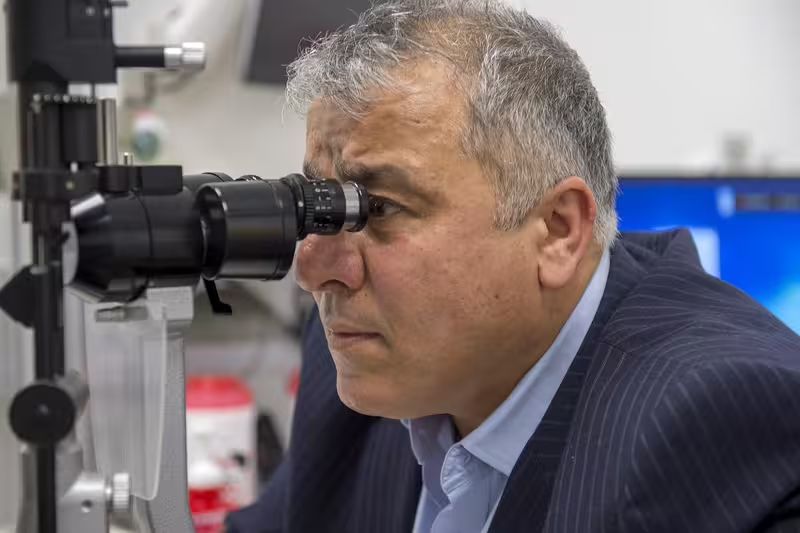
Reported Benefits and Common Themes
Local patients commonly report fast symptomatic relief after microsuction, with clearer hearing and less aural fullness. Many appreciate practitioners who explain each stage and record clinical findings for future care. Positive comments often highlight the calm clinical setting,
32 Intriguing Facts About Hythe
- Hythe's Historic Market Square: The Market Square in Hythe has been a focal point for trade since the medieval period, hosting a variety of markets and events that continue to attract locals and visitors alike.
- The Hythe Town Hall: Hythe Town Hall, built in the 19th century, features a distinctive clock tower and serves as a venue for local government meetings and community events.
- The Hythe and Dymchurch Railway: This narrow-gauge railway, established in 1927, runs along the coast from Hythe to Dymchurch, providing a charming steam train experience for families and tourists.
- St Leonard's Church Architecture: St Leonard's Church features a unique blend of Norman and Gothic architectural styles, showcasing intricate stonework and stained glass windows that reflect its long history.
- Hythe's Connection to the Cinque Ports: As a member of the historic Cinque Ports, Hythe played a significant role in maritime trade and defence, contributing to the region's economic development during the Middle Ages.
- The Hythe Festival: The Hythe Festival, held biennially, celebrates local arts, culture, and community spirit through a series of events including music, theatre, and art exhibitions.
- The Old Town Hall's Historical Significance: Hythe's Old Town Hall, dating back to the 18th century, was once the centre of local governance and is now a heritage site showcasing the town's civic history.
- The Hythe Imperial Hotel's Historical Role: The Hythe Imperial Hotel, originally built in the Victorian era, has hosted numerous dignitaries and events, serving as a symbol of the town's hospitality heritage.
- The Hythe Town Trail: The Hythe Town Trail is a self-guided walking route that highlights the town's historical landmarks and scenic views, encouraging exploration of its rich heritage.
- The Local Arts Scene: Hythe has a vibrant arts scene, with local artists and galleries contributing to the cultural landscape through exhibitions, workshops, and community projects.
- The Hythe Town Museum: The Hythe Town Museum showcases the town's rich history through exhibits of local artefacts, photographs, and documents, offering insights into its past.
- Microsuction Ear Wax Removal In Hythe
If you need trusted ear wax removal in Hythe, Hearing First Hythe is located at the Hythe Clinic. To arrange treatment, you can reserve a microsuction appointment in Hythe here, and the clinic team will confirm your booking and preparation notes. - One of Kent's Least Commercialised Seaside Towns
Hythe has retained a small-town atmosphere and historical character, avoiding the heavy commercial redevelopment seen in many coastal towns. Its tranquil seafront and traditional High Street continue to attract visitors seeking an authentic English seaside experience. - The Town Has Roman Roots
Excavations around Hythe have revealed Roman artefacts such as coins, pottery, and roof tiles, indicating the area was occupied or used by Romans well before it developed into a medieval port and Cinque Port hub. - Hythe Is a Popular Filming Location
With its unspoilt High Street, distinctive architecture and coastal scenery, Hythe is frequently chosen as a backdrop for period dramas, documentaries, and international productions that require an evocative English setting. - Hythe's Microclimate
Located by the sea and sheltered by the North Downs, Hythe often experiences milder winters and warmer, drier summers than inland Kent, making it appealing to retirees and outdoor enthusiasts who favour coastal living. - The Martello Towers Along the Coast
Built in the early 1800s to guard against a possible Napoleonic invasion, several Martello towers survive along the Hythe coast, with some repurposed into private dwellings or storage, preserving this defensive heritage. - Hythe Beach Offers Both Shingle and Sand
The shoreline is mainly shingle above the high tide line but reveals sandy stretches at low tide, providing varied opportunities for paddling, fishing, beachcombing and enjoying panoramic Channel views. - St Leonard's Tower Dominates the Skyline
The Norman-era tower of St Leonard’s Church rises to over 100 feet and houses a rare ring of eight bells; it served historically as both a religious feature and a lookout across the Channel. - Part of the Historic Saxon Shore
Historically included in the Saxon Shore system, Hythe formed part of a defensive network of forts and settlements built to protect Britain’s coastline from Saxon raids, shaping the town’s medieval identity. - The Elham Valley Railway's Terminus
The Elham Valley Railway once linked Hythe with Canterbury between 1889 and 1947, playing a strategic role during both world wars; traces of its embankments and bridges remain in the surrounding landscape. - The Royal Military Canal
Constructed between 1804 and 1809 as a defensive measure, the 28-mile Royal Military Canal now provides a pleasant walking and wildlife corridor, ideal for canoeing and observing resident flora and fauna. - Hythe's Ancient Island Origins
Geological and historical research indicates that Hythe was once effectively an island surrounded by tidal marshes; over time silting and land reclamation connected it to the mainland, altering its economic and geographic character. - Damage During the Second World War
Although not a primary military target, Hythe suffered bombing in WWII due to nearby strategic sites, which caused damage to buildings and left lasting marks on the town’s architecture. - The Old Fire Station Now Serves as a Restaurant
Hythe's former fire station has been imaginatively converted into a restaurant, retaining original features like tall engine bay doors and red brickwork while offering a contemporary dining experience. - Historic Inns with Medieval Origins
Several local inns, including The White Hart and The King’s Head, date back centuries and retain medieval cellars, timber beams and traditional fireplaces that reflect Hythe’s long hospitality history. - Hythe's High Street is Largely Independent
The town centre is notable for its family-run shops, artisan bakeries and unique boutiques, providing a personable shopping experience that supports local traders and attracts visitors. - Close Links with Sandgate and Folkestone
Hythe forms a coastal cluster with Sandgate and Folkestone, sharing cultural events, historical ties and community projects that together create a diverse offer of attractions. - Salt Production in Medieval Times
Hythe’s tidal marshes were once used for salt extraction, with salterns contributing to local trade and wealth during the medieval period. - Military Road was Built for Strategic Use
Constructed by the War Office in the 19th century, Military Road linked the School of Musketry with coastal defences; its straight alignment remains a feature of the local road network. - Hythe Hill Provides Panoramic Views
The escarpment to the north of town, known as Hythe Hill, offers sweeping vistas across the marshes and the English Channel, and is a popular spot for walkers and photographers. - The Crypt at St Leonard’s Opens Seasonally
The ossuary crypt contains thousands of neatly stacked bones and opens to visitors during set times of the year, offering a distinctive insight into medieval burial practices.
Microsuction Compared to Ear Syringing
As many GP practices have reduced or ceased offering ear syringing because of safety and funding constraints, microsuction has become the preferred alternative in private clinics. Microsuction provides a safer approach with lower complication rates, notably reducing the likelihood of infections or eardrum damage.
The technique is efficient and usually completed in a single appointment, enabling a swift return to everyday activities. Unlike irrigation, which can inadvertently push wax further into the canal, microsuction removes blockages under direct vision to avoid such displacement.
Rising demand for microsuction means private clinics offer a timely route to care, helping patients avoid the long waits sometimes associated with NHS pathways and ensuring faster symptom relief.